
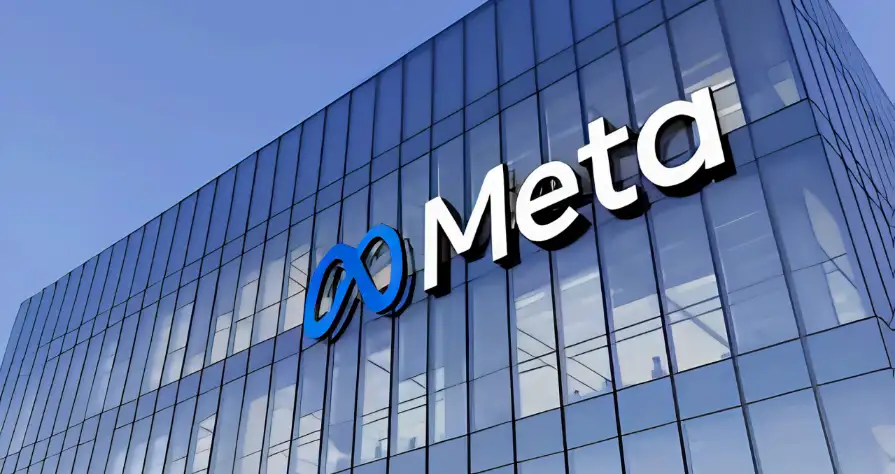
On May 20, 2026 Meta began notifying 8,000 employees their jobs are gone. The company made a record $56 billion in revenue last quarter. Here is what is really happening, and what every business owner needs to understand.
Let that sink in for a moment. Today right now, as you read this 8,000 people received an email from Meta telling them they no longer have a job. Not because the company is struggling. Not because they performed badly. Not because the business is losing money.
Meta made a record $56.31 billion in revenue last quarter. It is one of the most profitable companies on the planet. And it is still cutting 10% of its entire workforce today, because it believes artificial intelligence can do their jobs better, faster, and for a fraction of the cost.
This is not a story about one company. This is a signal about where the entire business world is heading and it is happening faster than most people realise.
What actually happened at Meta today?
At 9am Pacific Time today, Meta's Chief People Officer Janelle Gale sent an internal memo to the company's 79,000 employees. The message was clear: 8,000 of them would receive a notification by end of day. Additionally, 6,000 open job roles positions Meta had planned to hire for have been cancelled entirely. That brings the total effective headcount reduction to 14,000 positions.
The memo described the cuts as structural rather than performance-based. These are not people who failed. They are people whose roles no longer fit the AI-first company Meta is rapidly becoming.
Simultaneously, Meta is moving 7,000 workers into four new AI-focused organisations and creating entirely new job categories: ‘AI builder’, ‘AI pod lead’, and ‘AI org lead’. The company’s internal language describes the goal as ‘fundamentally rewiring how we operate.’
The staggering money behind this decision.
To understand why Meta is doing this, you have to look at the numbers. In 2024, Meta spent $39.2 billion on capital expenditure. In 2025, that jumped to $72.2 billion. In 2026, Meta has raised its guidance to between $125 billion and $145 billion nearly four times what it spent just two years ago.
Where is all that money going? Data centres. Nvidia GPUs. Custom silicon chips. AI infrastructure to power the kind of autonomous AI agents that Zuckerberg believes will define the next era of the internet. Meta is spending the equivalent of $315 to $370 million every single calendar day on AI infrastructure this year.
According to Wedbush Securities analyst Dan Ives, the 8,000 layoffs free roughly $2.4 billion in annual costs enough to offset only about 12% of the incremental AI spending. This is not about saving money. This is about remaking the company in AI’s image.
“Meta isn’t hiring more people. It’s retooling for AI.” — Reuters, May 20, 2026
What should YOUR business take from this?
If you run a business, the lesson from Meta today is not ‘fear AI.’ The lesson is: get ahead of it, or get replaced by someone who did.
-
Start understanding where AI can improve your operations , not to cut people, but to free themfor higher-value work.
-
Invest in digital systems that can integrate AI tools as they mature , a business without digitalfoundations cannot benefit from AI.
-
Upskill yourself and your team , the ability to work alongside AI tools is becoming the mostvaluable professional skill of this decade.
-
Don’t wait for certainty, Meta’s competitors who waited are already behind. The window to actearly is closing.
The uncomfortable truth nobody is saying out loud.
Mark Zuckerberg said something quietly revealing during Meta’s last earnings call. When asked about the layoffs, he said: ‘Getting everyone to use AI tools and getting the work done more efficiently is not the thing that’s driving layoffs.’ He did not explain what was. And the silence said everything.
What today’s news confirms is that the future of work is being negotiated right now in boardrooms, in memos, in lines of code and most people are not at that table. The businesses that understand this moment and act on it will shape what comes next. The ones that don’t will be reshaped by it.
At Inficom Software, we help businesses build the digital foundations that make you ready for this shift not scrambling to catch up when it arrives.